



Trade between India and the United Arab Emirates reached US$101.25 billion in the 2025–26 financial year, according to official Indian government figures. This is the second year in a row that bilateral merchandise trade has crossed US$100 billion.
The latest figures come as both countries work towards a target of US$200 billion in bilateral trade by 2032.
According to the Embassy of India in Abu Dhabi, the UAE is India’s third-largest trading partner and second-largest export destination. Indian exports to the Emirates exceeded US$37.35 billion during the 2025–26 financial year.
The numbers also show that trade growth has slowed. Bilateral trade stood at US$100.06 billion in 2024–25 before rising by around 1.2% in the following financial year.
Although the increase was relatively small, the UAE remains an important market for Indian exporters, while India continues to attract investment from Emirati businesses and financial institutions.
How the UAE–India trade agreement supports businesses
One of the main developments in the relationship has been the Comprehensive Economic Partnership Agreement, commonly known as CEPA.
The agreement was signed on February 18, 2022, and came into effect on May 1 of the same year.
According to India’s Ministry of Commerce and Industry, CEPA was introduced to improve market access, reduce trade barriers and support businesses operating between the two countries.
Today, India and the UAE exchange a wide range of products. These include petroleum, jewellery, food, textiles, chemicals, electronics and engineering goods.
For Indian manufacturers and exporters, the UAE offers access to customers and distributors in the Gulf. UAE companies, meanwhile, can explore opportunities in India’s large consumer and industrial markets.
The trade agreement allows eligible products to benefit from lower or removed customs duties. But this does not mean that every product can be imported or exported without restrictions.
Businesses still need to follow customs procedures, product standards and rules of origin. They must also consider shipping costs, market demand and competition before entering a new market.
UAE investment in India reaches $25.59 billion
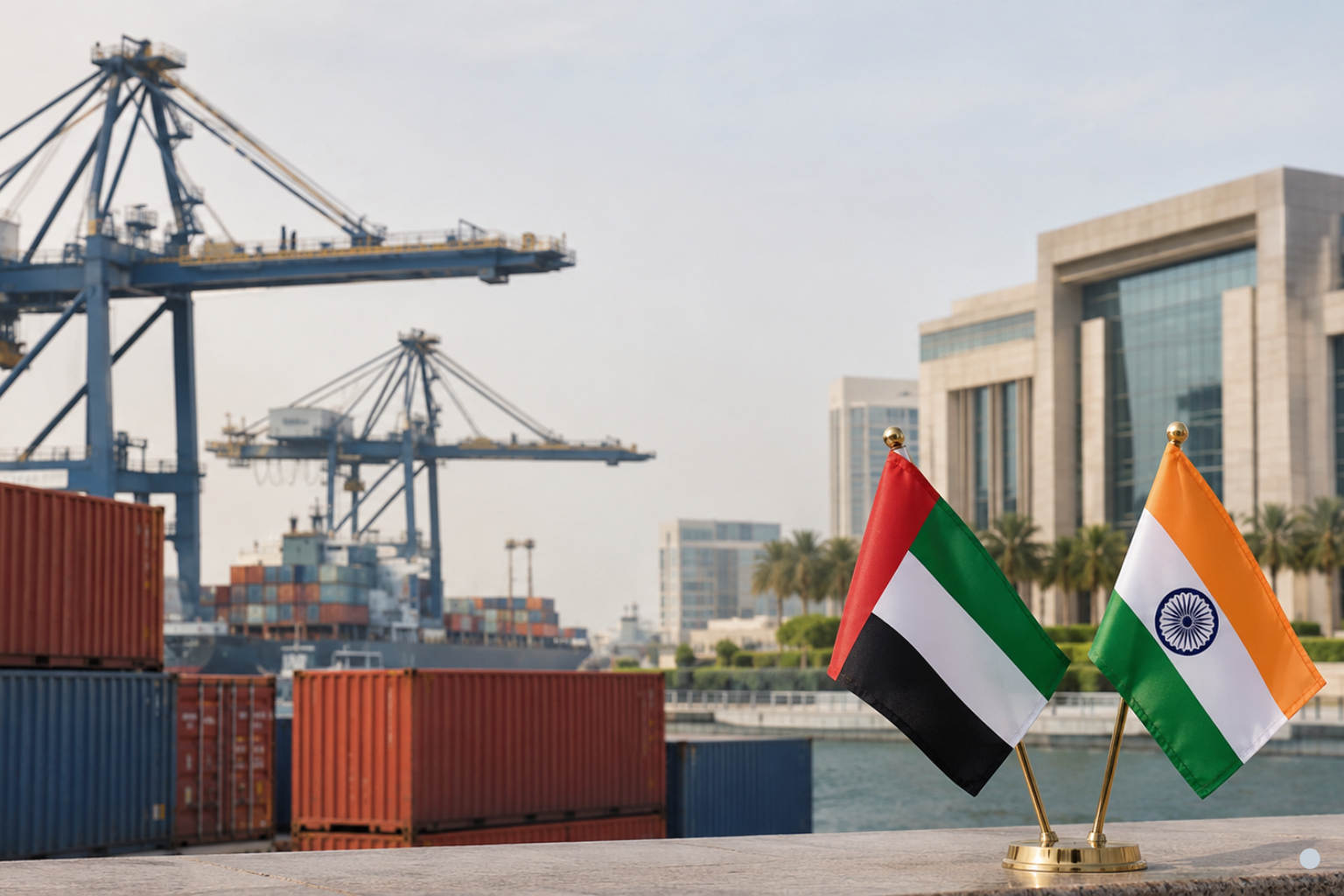
The UAE and Indian flags represent growing trade and investment ties between the two nations, with bilateral trade reaching US$101.25 billion in FY 2025–26. AI-generated illustration.
Trade is only one part of the economic relationship. Investment between the two countries has also expanded over the years.
Figures published by the Indian Embassy in Abu Dhabi show that cumulative foreign direct investment from the UAE into India reached US$25.59 billion between April 2000 and March 2026.
The UAE was India’s seventh-largest source of foreign direct investment during that period.
Emirati investment in India covers several sectors, including infrastructure, real estate, energy and financial services.
Companies and investment institutions from the UAE have also developed a presence in Gujarat’s GIFT City, an international financial services centre.
The two countries have taken steps to provide a clearer framework for investors.
A bilateral investment treaty signed in February 2024 came into force on August 31, 2024. According to the Government of India, the treaty is intended to provide investment protection for investors from both countries.
Another development has been cooperation on cross-border payments.
In July 2023, the Reserve Bank of India and the Central Bank of the UAE signed an agreement establishing a framework to support the use of Indian rupees and UAE dirhams for eligible cross-border transactions.
For companies trading regularly between the two countries, payment arrangements, exchange costs and transaction times can be just as important as import duties.
Smaller Businesses Could Benefit from Closer Trade Links
India and the United Arab Emirates are looking at new ways to help smaller businesses reach international customers. While large companies already play an important role in trade between the two countries, small and medium-sized enterprises could also benefit from closer economic cooperation.
During the UAE President’s visit to India in January 2026, the two governments discussed several projects, including Bharat Mart, the Virtual Trade Corridor and Bharat-Africa Setu.
According to the joint statement published by the Government of India, these initiatives are intended to improve market access for micro, small and medium-sized enterprises.
The projects aim to make it easier for businesses to connect with buyers, suppliers and distributors in different countries. They could also help smaller companies explore overseas markets without having to establish large international operations from the beginning.
For Indian businesses, the UAE is an established trading market with connections to other countries in the Gulf and beyond.
A small Indian manufacturer, for example, may be interested in supplying products to retailers or distributors in Dubai. Food producers, textile manufacturers, engineering companies and businesses selling consumer goods may also explore opportunities in the UAE market.
However, finding customers overseas is not always easy.
Before entering the UAE, a company needs to understand local demand, shipping expenses, customs procedures and product requirements. It must also consider how its prices compare with those of existing suppliers.
Finding a reliable distributor is another important part of the process. For some businesses, working with an established local partner may be more practical than opening a separate office or warehouse.
Opportunities for UAE Businesses in India
Closer trade links could also benefit UAE companies looking to expand into India.
India has a large consumer market and a wide range of industries, including manufacturing, technology, healthcare, retail and professional services.
UAE-based companies may explore opportunities to source products from Indian manufacturers, work with local service providers or develop partnerships with established businesses.
For example, a UAE trading company might look for Indian suppliers offering products at competitive prices. A technology company could explore partnerships with Indian software developers or IT service providers.
However, businesses considering India must also study the market carefully. Customer preferences, business regulations, operating expenses and competition can vary between industries and regions.
The opportunities available to an international company will depend on its products, services and ability to meet customer needs.
Why Business Relationships Matter
Trade agreements and government projects can help create better conditions for international business. However, companies still depend on strong commercial relationships.
For a smaller business, finding trustworthy customers and suppliers is often one of the biggest challenges of entering a foreign market.
Businesses need to understand payment terms, delivery arrangements, product quality requirements and the expectations of their partners.
Regular communication and clear agreements can help reduce misunderstandings and improve long-term business relationships.
The connection between India and the UAE also extends beyond government agreements and investment figures.
According to the Indian Embassy in Abu Dhabi, approximately 4.3 million Indian nationals were estimated to be living in the UAE in 2024, making Indians the country’s largest expatriate community.
The community includes business owners, professionals, employees and families from different parts of India.
Many Indian residents have established companies in the Emirates, while others work in industries such as retail, healthcare, construction, hospitality, education and technology.
These personal and professional connections can help businesses develop relationships across both countries.
An Indian entrepreneur interested in the UAE may already have contacts familiar with local business practices. Similarly, a UAE company looking for suppliers in India may benefit from existing professional networks.
However, personal connections alone do not guarantee commercial success. Businesses still need to check the reliability of potential partners and understand the financial risks involved.
The Indian community’s role in UAE business and cultural life is another important part of the longstanding relationship between the two countries.
What Smaller Companies Should Consider
As India and the UAE continue to strengthen their economic relationship, smaller businesses may have more opportunities to explore international markets.
But entering a new market should begin with careful research.
Companies need to identify potential customers, calculate operating expenses and understand the legal requirements for selling their products or services overseas.
They should also consider whether exporting through a distributor or establishing a local business would be the better option.
The trade initiatives discussed by India and the UAE could make some of these activities easier over time. Their benefits will depend on how the projects are implemented and whether businesses can use the services they provide.
For small and medium-sized enterprises, the real opportunity lies in finding suitable customers and building business relationships that can last.
As trade cooperation develops, companies that understand their markets and manage costs carefully may be better placed to benefit from closer ties between India and the UAE.
What the $200 Billion Trade Target Means for India and the UAE
India and the United Arab Emirates have agreed to work towards increasing bilateral trade to US$200 billion by 2032. The target shows that both countries want to expand their economic relationship and create more opportunities for businesses and investors.
The goal was reaffirmed during the January 2026 visit of UAE President Sheikh Mohamed bin Zayed Al Nahyan to India. During the visit, both governments discussed ways to strengthen cooperation in trade, investment, technology, infrastructure, energy and other important industries.
The target comes at a time when trade between the two countries has already crossed US$100 billion for two consecutive financial years. Bilateral trade reached US$101.25 billion in 2025–26, compared with US$100.06 billion in the previous year.
However, reaching US$200 billion will require much more than government agreements. Businesses in both countries will need to find new customers, increase exports and develop stronger commercial partnerships.
More opportunities for exporters and small businesses
For Indian exporters, the UAE is already an important international market. Companies dealing in food products, textiles, jewellery, electronics and engineering goods can explore opportunities with UAE-based importers, retailers and distributors.
The UAE’s trading connections with other international markets may also be useful for Indian businesses looking to expand beyond their home country.
Similarly, UAE companies can explore India’s large consumer market and opportunities in manufacturing, technology, infrastructure and professional services.
Small and medium-sized businesses could benefit from closer trade cooperation, particularly where agreements help reduce costs or improve access to customers.
However, entering a new market requires careful planning. Companies must understand local regulations, product requirements, competition and operating expenses before making investment decisions.
Investment and technology could support future growth
Investment is another area that could help both countries move towards their trade target.
UAE investors have shown interest in Indian infrastructure, energy, real estate and financial services. At the same time, Indian companies continue to explore business opportunities in the Emirates.
Technology could also become an important part of future cooperation. Businesses working in artificial intelligence, digital services, financial technology and advanced manufacturing may find opportunities to develop partnerships across the two markets.
Improved logistics, trade facilities and payment systems could make cross-border business easier, particularly for companies that regularly deal with international suppliers and customers.
These developments may support future trade growth, although their impact will depend on how effectively businesses use them.
Challenges that could affect the $200 billion target
Despite the positive outlook, the US$200 billion figure remains a target rather than a guaranteed result.
Global economic conditions, changes in customer demand, shipping expenses, supply chain disruptions and investment decisions could affect trade growth.
Businesses may also face competition, regulatory requirements and changes in international markets.
For smaller companies, finding reliable partners and managing operating costs will remain important.
Continued cooperation between India and the UAE could help address some of these challenges, but individual companies will still need to make their own commercial decisions.
The latest figures show that both countries already share a substantial economic relationship. The coming years will be important in determining whether this relationship can grow further and how much businesses of different sizes can benefit.
For India and the UAE, reaching the US$200 billion target would represent a significant increase in bilateral trade. More importantly, progress towards that goal could create opportunities for exporters, entrepreneurs, investors and companies operating across both markets.